This is going to be a long entry: possibly an uncomfortable one for a lot of people reading this. I apologize ahead of time – I am currently fighting a cold and I’m not as lucid as I probably should be when writing about something with the sort of sobriety this has (for me personally, at least). If you’re an artist, a comic book fan, or an admirer of either, you’ll probably enjoy this post. If not, you may want to skip it. It's pretty long.
Abstract: Making your art commercially available for profit or trade does not make you a better artist. Everyone is so quick to eager to be published that they exert more energy on ‘making a name’ for themselves than honing the skill of their craft.
You’re going to have to hold on with me for a little bit. I’m going to talk about a few different areas of art and then tie them together in the end. It may seem like a long trip, but I have to lay down a lot of groundwork to accurately make my point.
Mainstream Comics
Let me first start by saying what I’ve been doing at my job for the last few years. I work at a used bookstore (soon to be only 1 of 2 bookstores in town, with the bankruptcy of Borders causing mass store closings), and I am the token comic-book section runner. Before that, I was 2 years of head of the art & architecture section, and during the past four years I’ve been sectional lead from Political Science to New Age and everything in between. But mostly, I am “the comic-book girl.” If you want any Comics, American or Otherwise, you have to go through me. If we have people selling comic books to us, it means I’m grabbed immediately or sometimes called at home. This means that for probably at least 30 hours a week, I am getting paid to look at, grade, price, and arrange all sorts of comics (and often artbooks). I see everything that comes into the store. Of course, I get first pick of whatever the fuck I want.
Let me first start by saying what I’ve been doing at my job for the last few years. I work at a used bookstore (soon to be only 1 of 2 bookstores in town, with the bankruptcy of Borders causing mass store closings), and I am the token comic-book section runner. Before that, I was 2 years of head of the art & architecture section, and during the past four years I’ve been sectional lead from Political Science to New Age and everything in between. But mostly, I am “the comic-book girl.” If you want any Comics, American or Otherwise, you have to go through me. If we have people selling comic books to us, it means I’m grabbed immediately or sometimes called at home. This means that for probably at least 30 hours a week, I am getting paid to look at, grade, price, and arrange all sorts of comics (and often artbooks). I see everything that comes into the store. Of course, I get first pick of whatever the fuck I want.
Are you jealous?
You shouldn’t be.
You shouldn’t be.
There are a number of issues that come with being the token comic-book staff at a store. I wont be able to hit all of them, but if we ever meet IRL you’ll be damn sure I can fit hours of empty space with my opinion on the subject.
The first one is that a lot of the people you are dealing with fall into the stereotype that a lot of people hold about comic-fans: age 15~45, white, male, middle~lower class, introverted, socially awkward. Now, this isn’t to say that 50%+ of the people I deal with are like this, but I’d say at least 30~40% are all of those things I listed above, and easily 90%+ are at least 3 of those things. (Manga is a different story as-far-as demographics go, but keep your own vision of the “average manga reader” in your mind for this diatribe, too.) These facts about the lifestyles of the people I am effectively catering to mean that the stuff that sells best tends to hit a very “Quinton Tarrantino”, spaghetti-western niche – Women characters who serve as basically sex appeal with little backstory, heroes who are cut and wealthy and brooding, scripts that are written around lots of action (and some obligatory nookie-gathering) with no self-awareness towards the morality/ethics/philosophy of consequences caused by said storyline. This also means that for a lot of the people reading, the art is merely an addendum to the narrative of the script – the art is nice to have available, but it doesn't need to be super polished insomuch as it needs to relay ideas quickly. This often means that the art for a lot of the comics I see, especially if it was made before the year 2000, is pretty awful.
 What is being produced in comics is directed by how much money similar things are making themselves, and for all the guffawing and hemming over the intellectual laziness of a lot of comics being made these days, people are still quietly pushing their money into all the Punishers and Spawns and Grimm’s Fairy Tales of the publishing circles, which in turn makes the comic companies put more money into similar projects. This means a lot of comics being produced are for easy-reading fluff or mental escape, and need about the same amount of personal investment from the reader as an issue of the National Inquirer.
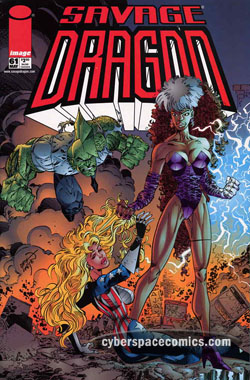
This brings us to our second issue: cheap art driven to fill the needs of storylines. With the economic downturn from 2008~now, even places like the comic publishing houses are beginning to feel the squeeze – Falling sales were part of the reason DC Comics has started its “drawing the line at $2.99” marketing strategy to appeal to more revenue: people will buy more if they are under the impression they are getting a better deal. This is the dirty little secret of every shop you've ever been to. Like everything else, if you’re losing money on something in comic production it means that you cut your costs somewhere to stay in the black, which often means taking chances on new talent who are willing to do more work for less – emphasis on the ‘new’, not so much on the ‘talent.’ What results is a lot of series produced for print with the speed and abandon of weekly newspaper strips, and about as much craftsmanship as you’d expect from someone rushing to meet deadlines. I have seen comics printed in the last 6 months that were of a quality equal or worse to any Image comic you read from 1990~1997 or any other low budget, high return independent comic house during the great comics boom of the 1980s~1990s.
Taste accounts for a lot, as does the situations people work under, but art in comics seems to have reached its highpoint and is now taking another steady decline downwards. On an almost-daily basis, I have to deal with what I call “the great cover fake-out” where a comic book has a amazingly illustrated cover by someone clearly in charge of their talent, and then the rest of the interior art is so lacking as-to almost be an insult – off anatomy, jarring or inconsistent coloring, fucking terrible inking jobs, pencils that would make even Michael Turner spin around in his grave like a top (Too soon?...). The list goes on and on. Granted, this sort of blasphemy is at it’s worst for a max. of 40% of printed material, but that’s still essentially saying that 2 out of 5 comics printed every month are full of art with notable quality issues. (Personally, some months it feels like the number is more like 4 of 5…)
The argument can be made that many comics are purposely being made with lo-fi art readers in mind, where the art is purely an addition to more important story ideas and dialogue fillers. However, most of these comics are through art-comic publishers or small, independent presses that are either direct-order or have such a specific market that they wont reach people unless those same people are going out of their way to find them. Most of the comics you will buy at bookstores or read at a shop are going to be by large comic publishing houses – Marvel, DC, Image, Dynamite, Dark Horse, CGE, DW, etc. – and are going to have multiple buildings and multiple presses devoted to them. They are, effectively, a corporation working in the sale of copyrighted flagship characters and storylines. In reality, character-based corporations are not so much concerned with selling you consistently awesome products, as they are making sure they get a devoted fan-base for their character(s). And it works, time and time again. In example: I will buy almost any comic with Storm (…finances withstanding…) in it, even if she’s only appearing for 2~3 panels and the artwork is utter shit. I will also put money down on other people having at least one licensed character they feel similarly about.
I’d say starting in the mid 1990s, desktop publishing became the new playground of anyone with an internet connection. Comics and art galleries are forgoing the expensive (and often environmentally unfriendly) need to print. Why pay for something when you can electronically publish it for free? Enter, the internet!
Easy Access Publishing, or alternatively “Jay Sherman Syndrome.”
 You can’t have an online rant without a “kids these days!” statement in there somewhere. The potshots of an online yesteryear are today’s annoying facts of life, namely easy access to budget publishing. I remember even 15 years ago if you could get your fanart printed into a playstation magazine you were pretty much the talk of the town, but now all you need is some money and some material and there are multiple outlets willing to print practically whatever you throw at them. I’ve jokingly started calling this Jay Sherman Syndrome (JSS) because it seems like anyone who has a webpage or a deviantart page is telling everyone to BUY MY BOOK! (I have had more DA polls come into my inbox over the last 6 months about people wanting to know what people are willing to pay for merch and if people would be willing to buy their comic or ashcan publication that I’ve had to start un-watching people just to cut down on the amount of pandering I’m getting.)
 What becomes the last straw of the situation is that people are so dead-set on having something published, even if it’s just a home-published zine, that they aren’t spending near as much time trying to polish what they are selling in comparison to the time spent making sure it can be sold. Contrary to popular etsy / flickr / DA belief, something’s intrinsic value and that same thing’s ability to be sold does not make it automatically worth selling simply by virtue of it being in existence. In example: I see B&W small-press comics sold to us on a weekly basis that are what I’d describe as “failures to launch”, or FTL (and yes, the other meaning of the acronym works equally as well here). An FTL can be for many reasons – poor artwork, poor design, lack of a solid story, lack of originality, flat-out plagiarism – but they all share one thing: The person who stumbled on them is going to most likely wonder how the fuck something of such poor quality was made in the first place, let alone allowed to get published at all. But it happens all the time. Somewhere in the world, it is happening right now. Tokyopop manga is notorious for this. So is Dynamite. I see it online a lot too.
So how did this start? I don’t honestly think people get into art purely because they are equating it with big dollar signs and a life of fame and fandom. I honestly believe that most people who consider themselves artists are doing it as a creative release, as a way to express themselves, and not because it's a means to an end. I think what happened is something that has been developing since before the 1990s technology boom.
Way back when there was no such thing as one-click publishing, artists had a much harder time of being discovered. When they were, it was a much bigger deal to become ‘well known’ because of all the access limitations they had to face – the internet was not how it is today, and most of the contact artists got was by either traveling with thier art in the back seat or submitting to galleries or art houses (or in the comicbook case, to places like DC or Marvel). The quality needed to garner publishing was harder than they are today (mostly for monetary reasons), which meant that having published work through an actual printing house as opposed to an independent press held more gravitas – you could make the argument that you had “made it.” Now that isn’t to say that there wasn't FTL material coming out of publishing houses before now, and that JSS wasn’t part of the reason some people were making the push to get their stuff out, but it was much harder so it cut out the people who were only getting published because of it’s relative ease and low price-tag. (The major exception to this being zines’. But those are sort of a different creature altogether.)
People like me (who were born in the mid 1980s but grew up during the 1990)s started to be part of the early internet experiment that was the World Wide Web, and one of the big perks was that you could ‘publish’ art online for free and get a much wider audience. This was back even when AOL could still fit on a 3.5" floppy. It was an exciting time, but there were still a lot of set backs; you could get a wider audience, but if the only fee they were paying for access to your art was towards an ISP, the need to put out additional money for something you could now get for nothing was at an all-time low (and the cause for many a copyright infringement headache, I’m sure). The first wave of internet-to-print publishers were also notorious for higher prices per item made (be them t-shirts, books, mugs, whatever…) since they were still feeling out for their market, as well as (I’m assuming?) the not-yet-streamlined system for organizing and producing small-scale publishing packages for those who may only need 10 mousepads or 5 softcover books instead of 100. This may seem backwards, but because of how printing presses and screen-printing shops are set up, it is almost always cheaper-per-unit for a company to make a shit-ton of something and have to deal with liquidating the run-off than it is to make 5 of something if they aren’t guaranteed that all 5 will sell. I’m pretty confident in saying this sort of low-profit -high-cost-to-the-customer publishing was the reality of the game until the mid-to-late 2000s.
 So now we’re at the 2010s, and boy things have changed. If you have a drawing on a cocktail napkin and an Internet connection you can make almost anything you’d ever want! – stickers, key chains, t-shirts, pamphlets, underpants, coffee mugs, laser pointers,… you name it and it can be made to order! Because of this ease of production, people don’t need to worry anymore about the quality of their work being of a certain caliber to publish, and printing services are all-too-happy to make money off of whatever you want to sell.
Published artists vs. Non-Published artists
Curiously, what hasn’t changed in the past 30 years (and probably never will) is the idea that the only way to have any artistic girth in your community is to be published. Let me take that back, partially – The easiest avenue to go towards Being Taken Seriously As An Artist is by getting published, either independently or through freelance/salary. This, of course, is a total bullshit assumption, but a very true one. It is the elephant in the room for the vast majority of us. And why? Well, I could easily make a second job out of compiling the social history of how it all began but since I don’t have an extra paycheck and 3 years of time, I’ll give you some quick observations I’ve noticed in my short life thus far:
Curiously, what hasn’t changed in the past 30 years (and probably never will) is the idea that the only way to have any artistic girth in your community is to be published. Let me take that back, partially – The easiest avenue to go towards Being Taken Seriously As An Artist is by getting published, either independently or through freelance/salary. This, of course, is a total bullshit assumption, but a very true one. It is the elephant in the room for the vast majority of us. And why? Well, I could easily make a second job out of compiling the social history of how it all began but since I don’t have an extra paycheck and 3 years of time, I’ll give you some quick observations I’ve noticed in my short life thus far:
- People associate having a large audience with having importance. I constantly hear people saying things at my work like “well Glenn Beck wouldn’t be so popular if he didn't make sense!” and “If the Twilight series was poorly written, then why does Stephanie Meyers enjoy so much profit and fandom from it?” An item’s popularity speaks more about the demographic(s) of people interested in said item than it does of its intrinsic value or craftsmanship. (Another great example is the rage-face comic meme.) Just because something is popular does not mean that the ideas that carried it to popularity are somehow superior or infallible. Like so many things, it was just at the right place at the right time.
- In an innocent way, young artists push other young artists to get published out of affinity for the friendship or because of personal investment reasons, E.g. people on deviant art egging each other on to make prints and get comics published through online printers because they are trying to show support of their friends and their own personal tastes. This has become a snowball effect where, because of the low cost and relative ease of publishing, a new trend has occured – to get published means to ‘be a real artist’, ‘to make it.’ This assumption is being retold at a cancerous rate, and has become an unverified-- but wholey-supported-- fable that many young artists are now being measured by. The conversation has now turned into ‘the people who are not choosing not to commercialize/publish for personal reasons (whatever they may be) are doing so out of sheer laziness or poor quality of the work.’
- We as a society (in America for sure, but around the world as well) have been trained that the amount of money made from something acts as a litmus test on its inherent worth. We have been subconsciously training generation upon generation that to make art is to be creative, but for that creativity to be justified or respected it has to become saleable. It has to become a commodity for trade, it has to be something we can hold, we can sell, or we can purchase. We have, effectively, trained young artists to aspire towards accepting a price-tag on self expression.
Just to drill the point home, try this experiment:
Two people, person A and person B, of equal talent make a website/blog to showcase their art. Person A decides to spend more time on personal issues or other hobbies and Person B decides to spend more time getting their work published through various websites or pay-per-item online publishing. Person A and Person B have a friend, Person C, whom they both show their artwork to. Assuming Person A and Person B are completely equal in temperament, relationship to Person C, and artistic talent, which do you think Person C is going to hold as having more artistic gravitas? Think of the answer in your head. Now, say the reason you came to that conclusion out loud.
Now:
Assume that person A is your best friend and person B is your close online companion. Can you honestly look person A in the eyes and tell them, without remorse, that purely on the basis of their choice not to chase after a publishing deal that their art means less?
Assume that person A is your best friend and person B is your close online companion. Can you honestly look person A in the eyes and tell them, without remorse, that purely on the basis of their choice not to chase after a publishing deal that their art means less?
I hope you see what I’m getting at.
Thanks for making me depressed, asswipe. (Or, “What Now?”)
For as sad as this all is, hope is not lost. The conversation we should be instead having is not about how to make getting paid or getting published the bad-guy of artistic expression, but how to approach both from a more realistic point of view. We all come from different backgrounds, have had to deal with different gains and loses, so why are we all subconsciously measuring art like this? And don’t tell me that you don’t, because you are lying. We all do it, to some extent or another. We continue the fable when we keep pressing people we like to get published, to make money from their art even if they don’t particularly want to. We continue the fable when we make snide comments to others about someone’s personal portfolio. We continue the fable when we lose self-esteem because of lack of page-views, or merchandise sold, or get upset with friends when they get published and we don’t.
For as sad as this all is, hope is not lost. The conversation we should be instead having is not about how to make getting paid or getting published the bad-guy of artistic expression, but how to approach both from a more realistic point of view. We all come from different backgrounds, have had to deal with different gains and loses, so why are we all subconsciously measuring art like this? And don’t tell me that you don’t, because you are lying. We all do it, to some extent or another. We continue the fable when we keep pressing people we like to get published, to make money from their art even if they don’t particularly want to. We continue the fable when we make snide comments to others about someone’s personal portfolio. We continue the fable when we lose self-esteem because of lack of page-views, or merchandise sold, or get upset with friends when they get published and we don’t.
This has to stop.
We have to stop policing our art based on an archaic and arbitrary value system. And this is where everything comes together:
We have to stop policing our art based on an archaic and arbitrary value system. And this is where everything comes together:
Shitty published comic art and shitty privately-published art can often be in the eye of who’s receiving it – one person’s ‘shitty’ may be another person’s ‘bearable’ – but it has the same negative effects on other artists and people outside of the art community looking in.
One, it lowers the quality standard of which all art is viewed until it reaches a point where people who work hard to produce something and people who rush through it are viewed through the same lens, as relative equals. If there has been a negative effect of the 1990s “everyone should have great self esteem just for being alive!” emotional circle-jerk, you can cast my vote that what has happened to how art was judged was one of the most fundamentally destructive side-effects of it. If you add intent into the equation, it can be argued that well-intended art that is poorly executed is equal (or better?) in worth than well-executed art based on less well-intentioned meanings. When people see that it takes less effort and careful, calculated honing of their craft to get it published, it means that more equally untalented but highly driven people will get their stuff pushed out for sale, regardless that its craftsmanship, well, sucks. It also means that people who have learned to really work out the kinks in their art will be easier to be lost or mistakenly cast aside in the growing sea of competing art of lower craftsmanship.
Two, it creates a vacuum in which self-expression and artistic self-identity are given an estimated worth in correlation to how much money they can make. There are a lot of people who are not interested in making a living off of the revenue their art brings in. People make art for as many reasons as there are stars in the sky, so why the hell should all art be quietly judged with the same cruel, capitalistic intent? Well-meaning people tell me all the time that I should get a job in art or sell my art or try to get into showcases, but have never once asked me what I want. Because I think at the time it doesnt matter what I want, as long as I can get paid doing it. Perhaps I never wanted that. Perhaps I don’t feel ready and I have a long way to go before I feel the quality of my art is good enough to mass-publish. Either way, every time this conversation is happening it drills into the brain “I like your art, but it would mean more if it was available for sale.”
Although it may not seem like it from my huge rant, making money off of art or pursuing a publishing deal for your comic or illustrated ideas does not automatically make you jaded or an enemy of the 'community'. I am so lucky to have friends who are artists and are lucky/driven enough to make a majority of their living off of their creativity. The question people should be taking up with all of this nonsense I just typed is not how being published will effect how they are being perceived, but why being published will effect how they are being perceived. It seems like once people get published they feel it is the endgame, that the improvements they make to their art are a side effect of working on a project as opposed to a necessity of personal growth. I see it happen a lot, that people's art plateaus the second they get a publishing deal. (I started putting links to specific sites in here but I decided that was mean spirited so,... I know you have examples of your own from sites you frequent.)
It is okay to dream big and want to grab every star up on your way. There is nothing wrong with wanting to share your vision with a broader audience when & if you are and ready. But it is also okay to admit that you are not ready, that perhaps a few years of work will finally have your anatomy flaws worked out or that maybe just a bit more practice inking will have you confident enough to send your portfolio to Marvel headquarters. Everyone wants to cheer their friends on when they make an exciting breakthrough in their art, but we shouldn't be pressuring people to make it into something for sale unless its craftsmanship is worthy of being purchased, and more importantly, if the artist themselves are ready to take that leap.
Just because you got accepted to do a line of Rittenhouse™ ACEOs does not mean that you don’t need additional years of artistic improvement to get a strong grasp on anatomy or drawing backgrounds.
Just because you have 3 hits to your webpage and no one has sent you an email telling you how life-changing your portfolio is, it is not an unalterable reflection on how well crafted your art is or will aspire to.
In the meantime, we should be working together to be accountable for the art we pursue and the reasons for which we pursue it. I don’t think I’ll see a change to the status quo any time in the near future, but it would be nice to let art exist under the terms the artist meant it to be as opposed to making it conform to an arbitrary ideal we were taught. Love yourself, and enjoy the lifelong journey that is your art. Just don’t let that exploration taper off once someone is willing to pay you for it, and don't make selling your stuff the endgame.




No comments:
Post a Comment